


Vietnam rice farming: technology & status
Rice farming in Vietnam is central to the national economy and food security; the Mekong Delta in particular is a major global breadbasket. In response to climate change, water scarcity, and salinity, the sector is shifting from yield-only priorities toward low-carbon, high-efficiency systems.
Typical features include multi-cropping (two to three harvests per year), direct seeding, and intensive production behind triple levees. High productivity and export competitiveness are strengths, but uneven quality and environmental load from heavy chemical inputs remain structural challenges.
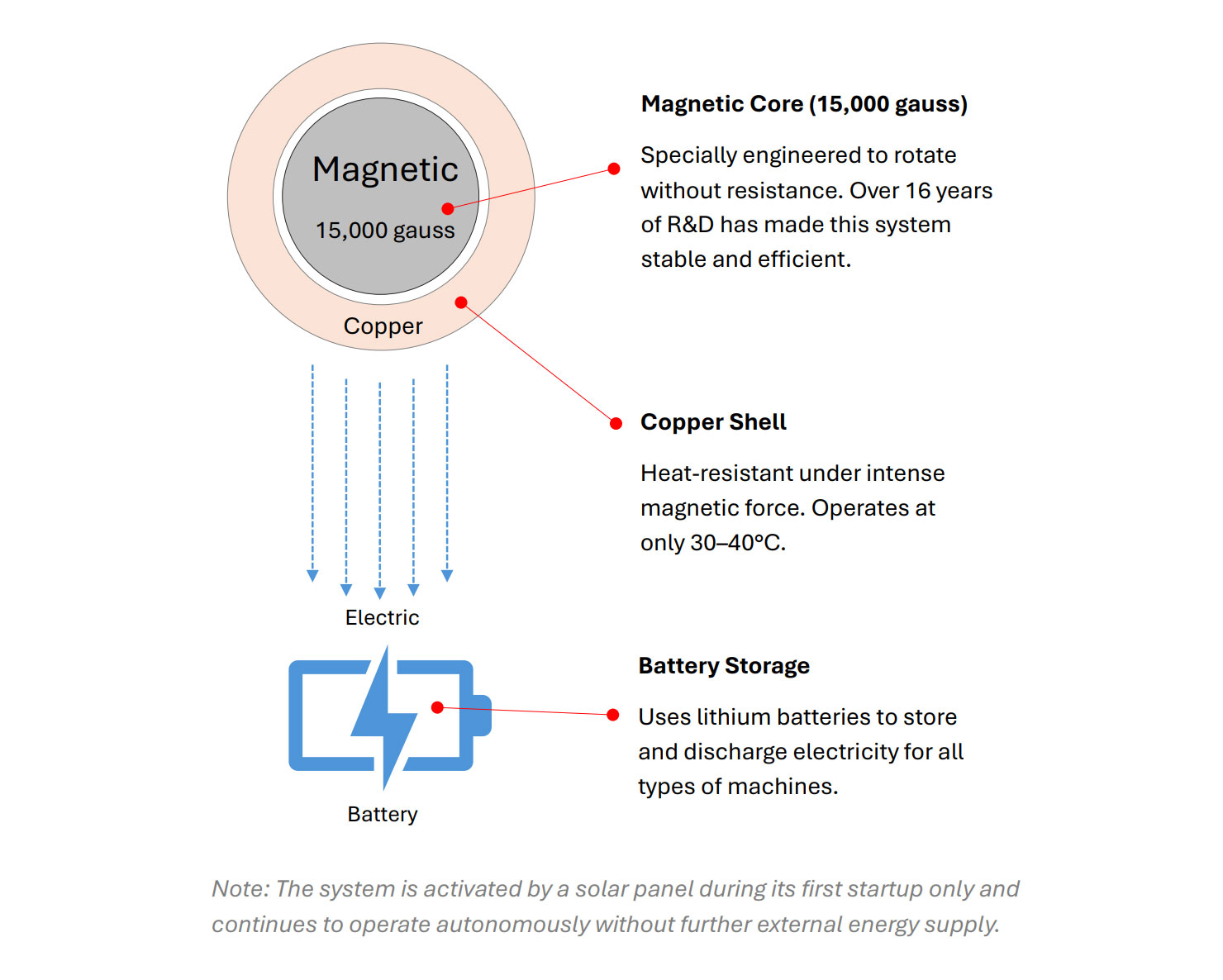
Strengths and weaknesses of Vietnam rice farming
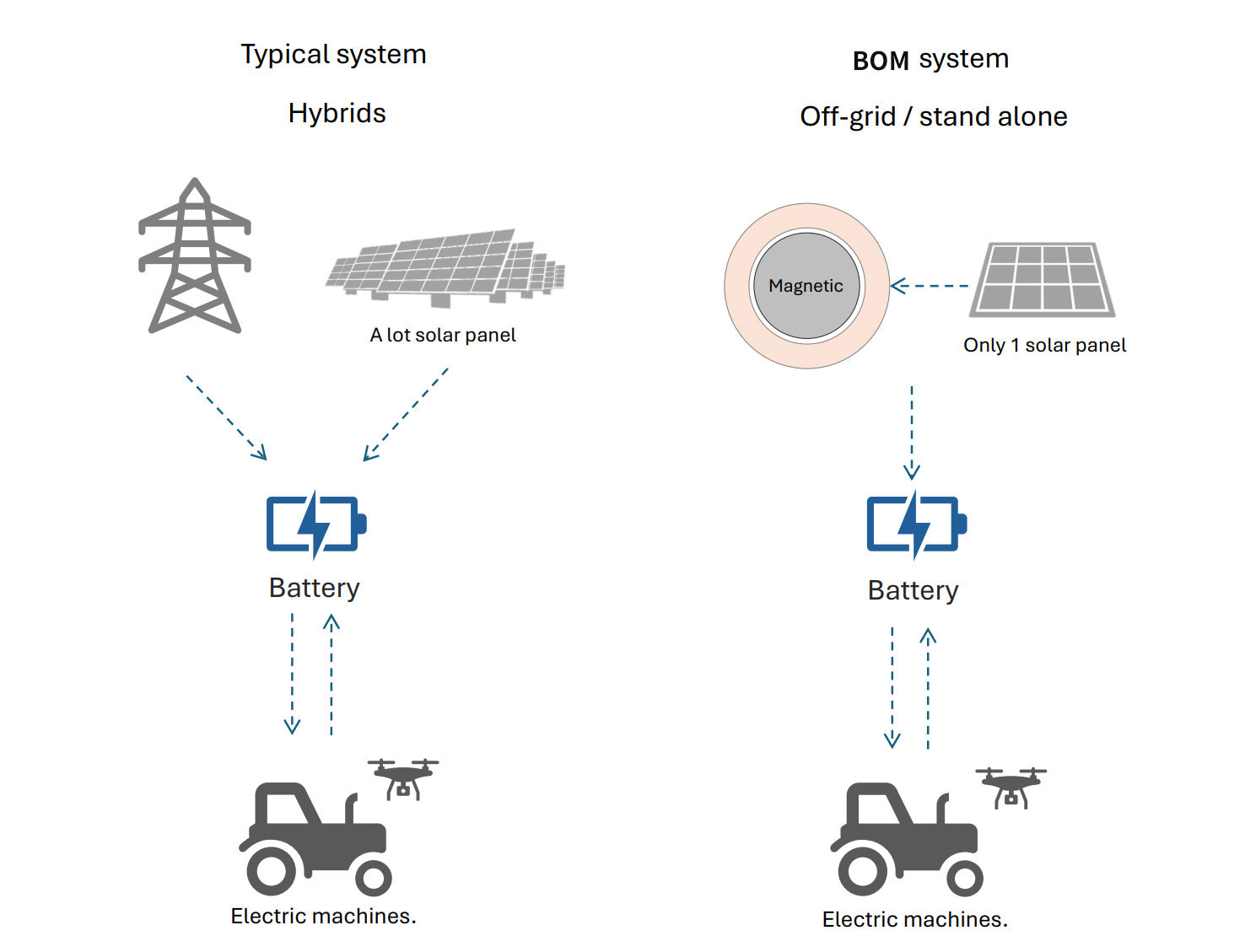
- Strength: high yield per hectare from fertile soils and climate
- Strength: strong export competitiveness from labor costs and logistics
- Weakness: need for more uniform quality for premium markets
- Weakness: soil and water degradation from excess fertilizer and pesticides
- Risk: yield loss from drought, upstream dams, and saltwater intrusion
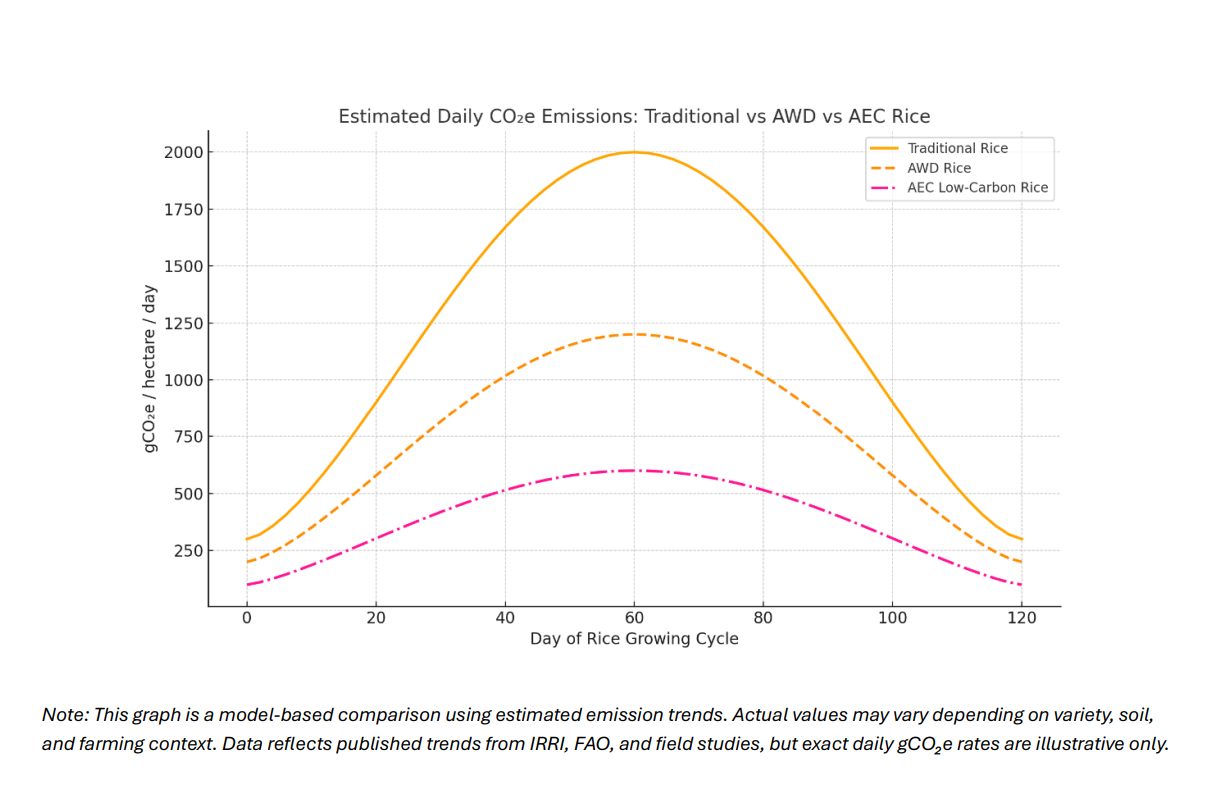
- Climate: higher methane from continuous flooding
AWD (Alternate Wetting and Drying) — essentials
Operating practice that cuts both water use and greenhouse gases
AWD avoids keeping paddies continuously flooded: fields are filled to a set level, then allowed to dry naturally before re-irrigation when the water table falls to about 15 cm below the surface. In the field, a Pani Pipe is used to observe groundwater level and time irrigation precisely.
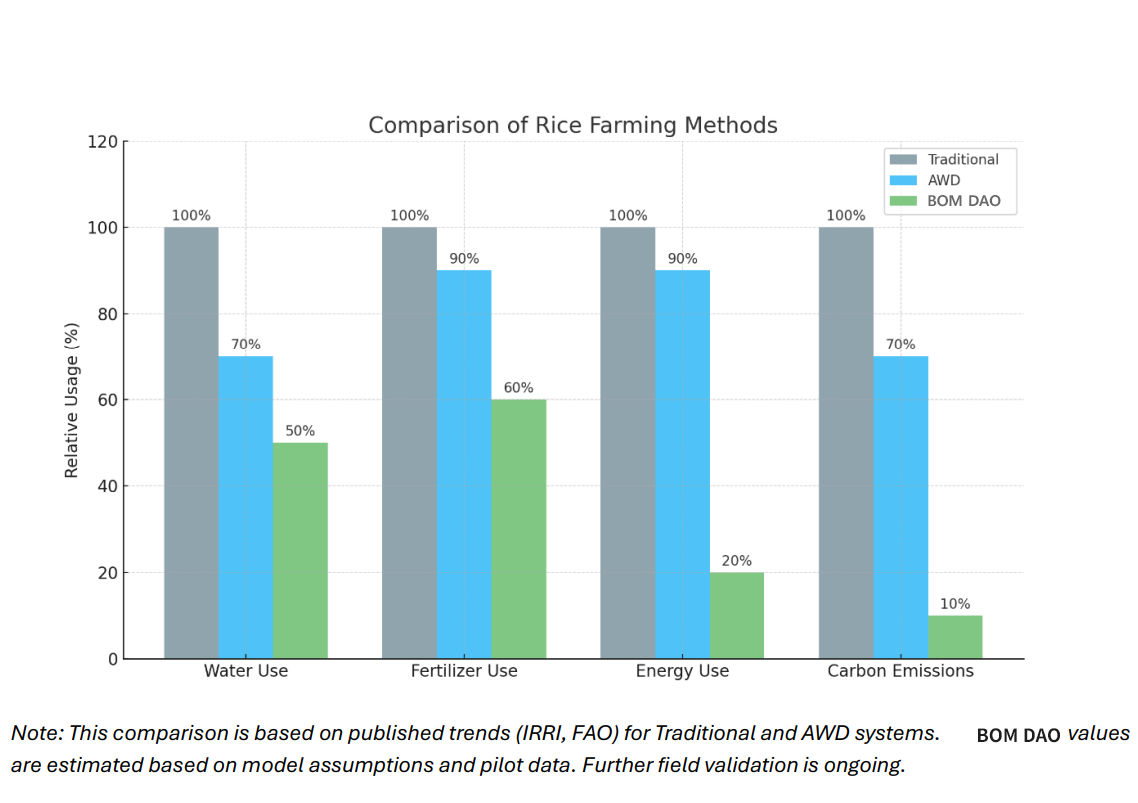
This approach typically saves 20–30% water, can cut methane emissions by up to ~50% through soil aeration, and supports deeper roots—reducing lodging and stabilizing yields.
Problems facing Vietnam rice farming and why action matters
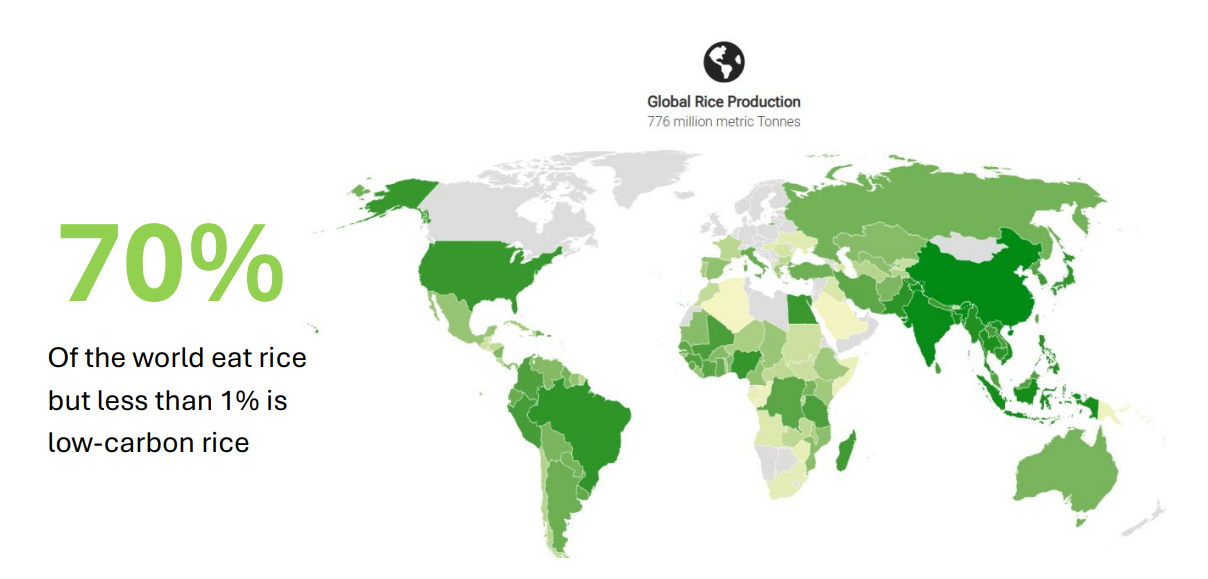
The Mekong Delta faces drought, saltwater intrusion, and volatile water availability at once. Continuous flooding raises methane emissions, while heavy chemical inputs degrade soil and water—hurting long-term productivity.
An integrated model is needed: AWD-based water management, low-carbon certification, and digital MRV (measurement, reporting, verification)—beyond yield-only thinking.
Carbon credit revenue model built on AWD
The core idea is to convert methane (CH₄) reductions into CO₂e and issue carbon credits. Roughly 5–10 t CO₂e per hectare per year is often achievable; market prices then drive incremental cash flow.
| Stage | Actor | Role & revenue flow |
|---|---|---|
| Data collection | Farmers / IoT | AWD practice & water-level logging |
| Certification & issuance | Project developer | International certification via MRV |
| Trading | Brokers / exchanges | Sales to corporates & institutions |
| Revenue sharing | Community | Farmer incentives, opex, fees |
Agricultural water purification: magnetic–muscovite
Muscovite’s adsorption is paired with magnetic particles for rapid recovery—removing heavy metals and excess nutrients and enabling reuse of treated water.
100 ha water treatment station — design & budget
Designed for roughly 5,000–7,000 m³ per day for a 100 ha rice block.
| Item | Details | Est. cost (USD) |
|---|---|---|
| Equipment | Magnetic separator, mixing tanks, pumps | $80,000 ~ $120,000 |
| Infrastructure | Civil works, piping, electrical | $30,000 ~ $50,000 |
| IoT / data | Water-quality sensors, flow meters, monitoring | $15,000 ~ $25,000 |
| Initial media | First load of magnetic–muscovite composite | $10,000 ~ $15,000 |
| Total | Per 100 ha station (indicative) | $135,000 ~ $210,000 |
Social return & DAO-based operations
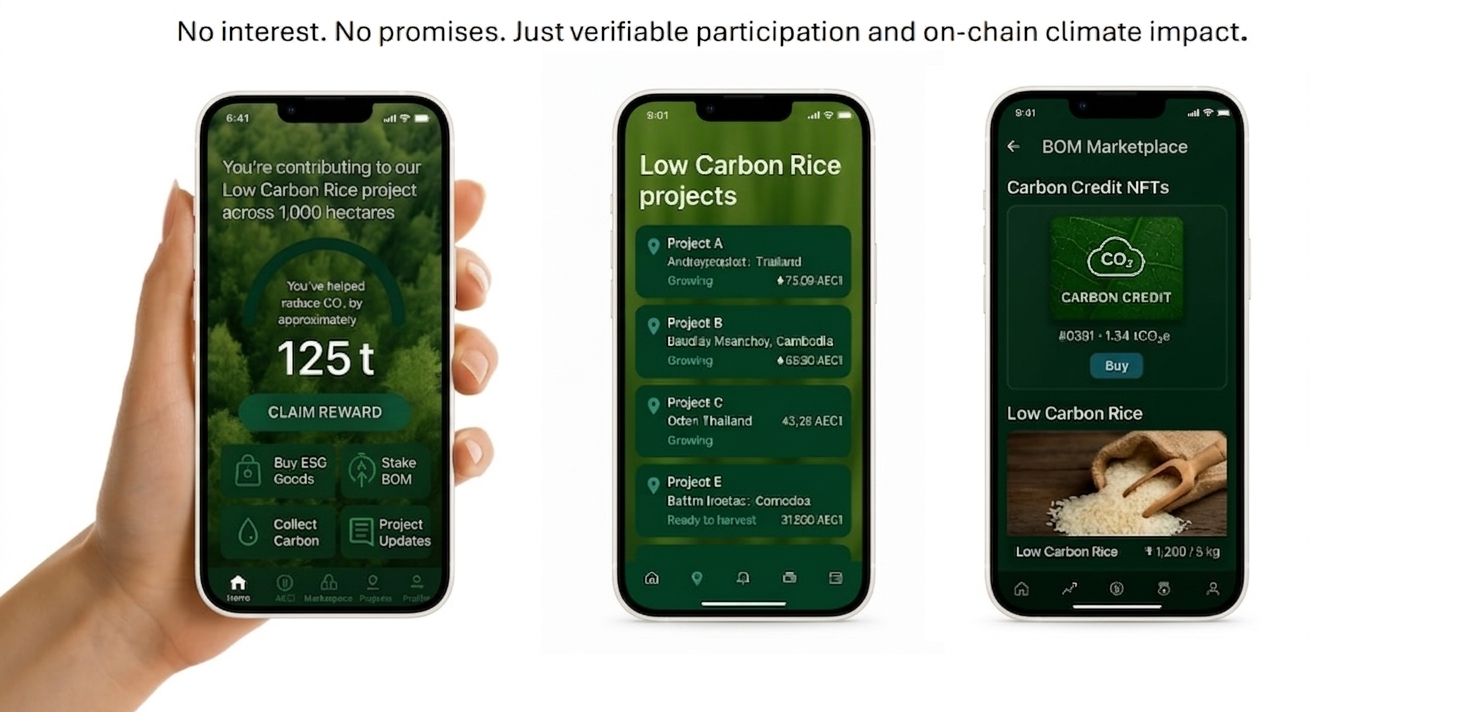
A share of carbon credit and premium rice revenue is returned to Agent Orange–affected communities and local welfare.
Transparent distribution and participatory governance through a DAO let communities be both beneficiaries and decision-makers.
- Healing fund (direct aid + welfare): 40%
- Participating farmer incentives: 30%
- Operations & technology reinvestment: 20%
- DAO reserve: 10%
Frequently asked questions
Typically 20–30% versus conventional flooding, depending on soil and irrigation infrastructure.
We recommend transparent rules agreed in advance—farmer incentives, opex/tech reinvestment, local welfare funds, and similar buckets.
Heavy metals, excess nutrients (N/P), and turbidity; treated water can be reused, supporting circular farming.
Under local procurement assumptions, roughly $135k–$210k; final numbers depend on detailed specs.
Piloting validates operating parameters and MRV credibility for each soil and water context—reducing technical and financial risk before scale-up.